Start with a workable mix
- Keep a dry supply of leaves or plain torn cardboard nearby.
- Mix soft, wet scraps with dry, open-textured material.
- Check moisture inside the heap, not only at the lid.
- Leave room for finished material to mature.
Choose a system you can reach and maintain
A compost system works best when it fits your space, physical ability and regular supply of materials. An open heap offers easy access but may not suit a small shared garden. A closed bin can keep the area tidier, although its access hatch and lid still need to work well. A tumbler changes how you mix the contents but does not remove the need for a balanced feed, enough moisture and time.
Position the system where you can use it throughout the year without blocking paths or creating a nuisance. Follow local guidance about siting, pests and permitted materials. Leave enough working space to lift a lid, use a fork safely and remove mature compost. Before buying, inspect the hinges, replacement lids and access panels. A bargain bin becomes less useful when its first broken catch makes it awkward to operate.
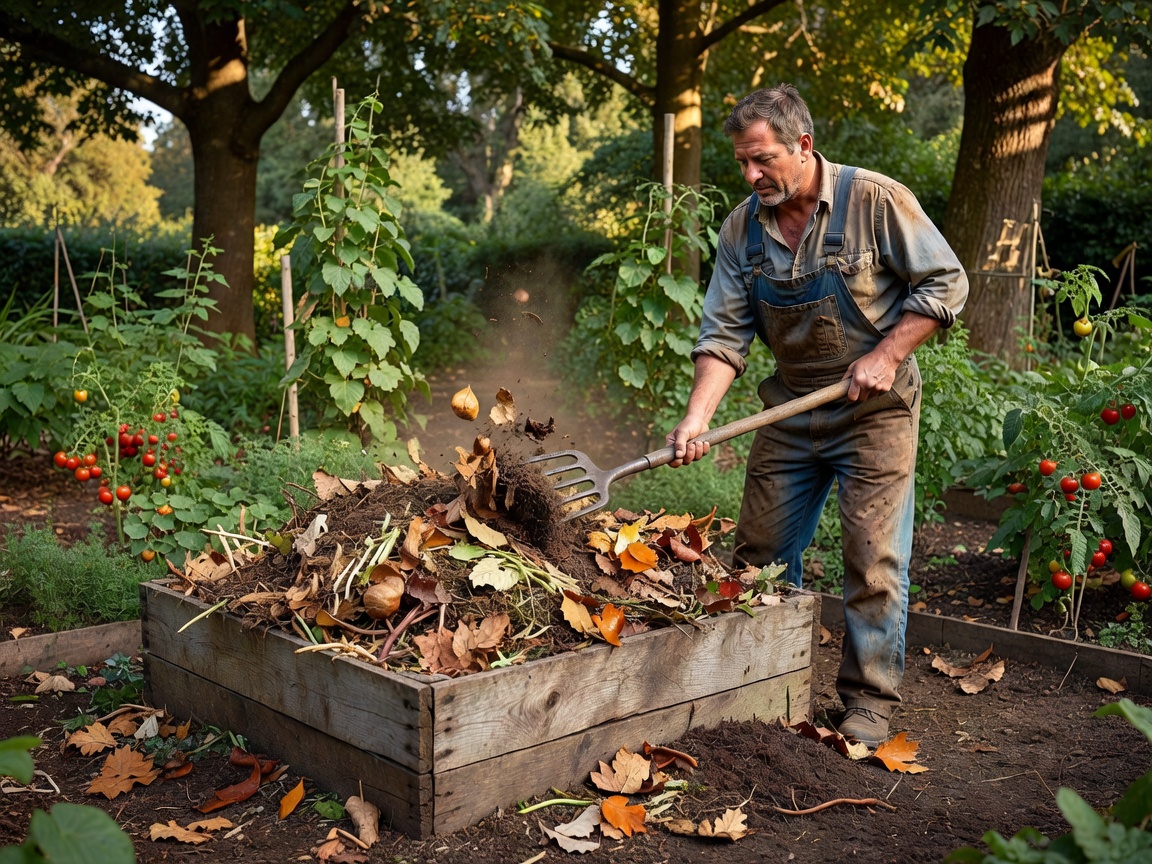
Feed for structure as well as ingredients
Soft green trimmings and uncooked fruit and vegetable scraps supply moisture and readily decomposable material. Dry leaves, small amounts of plain uncoated cardboard and similar suitable materials help absorb moisture and create structure. These everyday categories are useful starting points, not exact chemical measurements. Grass clippings, for example, can form a dense wet mat if added as a thick layer.
Chop large soft material when convenient and break up compacted clumps. Mix additions rather than building a sealed layer of one ingredient. Cardboard should be free of plastic tape, glossy coatings and other unsuitable components. Woody prunings break down slowly unless reduced in size; they may be more useful in a separate pile or as appropriate habitat material than in a small kitchen-scrap bin.
For an ordinary cool home heap, leave out meat, fish, dairy, oily cooked food and pet faeces. Follow local advice for invasive weeds, diseased plants and persistent weed roots. Do not assume the centre becomes hot enough to make every risky material safe. A municipal collection service may accept things that your home heap cannot handle, because its process and controls are different.
Adjust the heap before adding a product
The heap smells sour or rotten
A wet, compacted mix may lack air. Add suitable dry, bulky material, break up dense patches and mix carefully. Check whether rain is entering or too many wet scraps arrive at once. A cover should manage rain without sealing the system airtight.
The contents look dry and unchanged
Check beneath the surface. If the interior is dry, add water gradually while mixing and include suitable fresh material. Tough stems and cold conditions can also slow progress. Do not flood the heap to make up for a long dry period.
There are flies or signs of rodents
Bury fresh scraps within the mix, avoid unsuitable food and remove spillage nearby. Check gaps and the bin’s intended pest-resistant features. Persistent rodents require appropriate local pest advice; adding a scented powder is not a dependable solution.
The heap never becomes noticeably hot
Small or gradually fed heaps often remain cool and still make compost. Let the process take longer and do not rely on it to destroy seeds or pathogens. Sustained hot composting needs more deliberate management than simply owning a thermometer.
Use simple tools and a repeatable check
A sound garden fork and a bucket may be sufficient for a small setup. A dedicated aerator can help in a narrow bin, but check whether you can operate it comfortably and whether its moving parts are replaceable. A thermometer is useful when you are deliberately managing a hot process; it is not a requirement for every household heap. Clean tools after use and avoid moving questionable material into clean growing areas.
Check the interior moisture and texture when adding material or investigating a problem. The mix should be damp rather than waterlogged. Wear gloves as appropriate, wash hands after handling and avoid breathing dust when moving dry compost. People with particular health vulnerabilities should follow relevant medical and public-health advice for handling compost and potting materials.
Know when the result is ready
Finished compost is generally dark, crumbly and earthy-smelling, with much of the original soft material no longer recognisable. A few woody pieces can be screened out and returned to a new batch. Leave uncertain material to mature rather than treating a pleasant surface appearance as proof that the whole bin is ready. There is no reliable universal finishing date for every climate, bin and feed mix.
Use mature compost as a soil amendment where appropriate, not as an automatic substitute for a formulated seed or container-growing medium. Its nutrient content and structure vary. Keep a brief note of what went in and which adjustments worked. Those observations are more useful than continually changing products, and they make your next batch easier to manage.