Before opening the tap
- Check moisture below the soil surface.
- Look for leaking taps, joints and damaged hoses.
- Prioritise newly planted and container-grown plants.
- Check local restrictions and the weather forecast.
Work out where water is needed
A dry-looking surface does not always mean the root zone is dry. Check below the surface without disturbing roots, and consider the plant, soil and recent weather together. Containers may dry more quickly than open ground, while a poorly drained bed can stay wet beneath a crust. Wilting can also result from root problems or heat stress, so automatically adding water may make a problem worse.
Group plants with similar needs where practical. Appropriate planting, healthy soil structure and a suitable mulch can reduce unnecessary demand, but none makes watering irrelevant. Apply mulch to moist soil where suitable and keep it clear of stems and trunks. Established plants and newly planted specimens often need different attention. Prioritise vulnerable plants rather than applying the same schedule to every part of the garden.
Repair the route before automating it
Inspect the tap connection, hose and accessories while water is flowing. A slow drip at several joints can go unnoticed when attention is on the sprinkler. Shut off and depressurise the system as appropriate before replacing washers or fittings. Match parts to the equipment rather than forcing incompatible connectors together. Keep hoses away from sharp edges and store them as the maker recommends, especially before freezing weather.
For small areas, a watering can offers direct control without a permanent network of fittings. For larger beds, drip irrigation may put water near roots with less wetting of paths and leaves, but only if emitters are correctly placed and working. Filters, pressure requirements and inspection still matter. A blocked emitter can leave one plant dry while the timer gives the impression that everything has been handled.
Compare the upkeep, not just the promise
| Approach | Useful for | What to check |
|---|---|---|
| Watering can | A few containers or targeted watering | Lifting weight, reach and repeated trips |
| Hose with shut-off control | Flexible manual watering | Leaks, flow control and local restrictions |
| Drip line | Established layouts with similar plant needs | Filters, pressure, blocked outlets and seasonal changes |
| Timer or controller | Consistent scheduling when correctly set | Rain adjustment, battery condition and overwatering |
| Moisture sensor | An extra observation at a chosen location | Placement, soil differences and calibration guidance |
No option has a universal savings figure. A comparison needs a baseline, a defined area, similar weather and a record of actual use. A smart controller can be helpful, but a poor schedule can still waste water. Treat app recommendations as inputs to a decision rather than proof that the garden needs irrigation. Check that equipment remains usable if a subscription, network connection or proprietary service stops.
Collect rainwater without creating a hazard
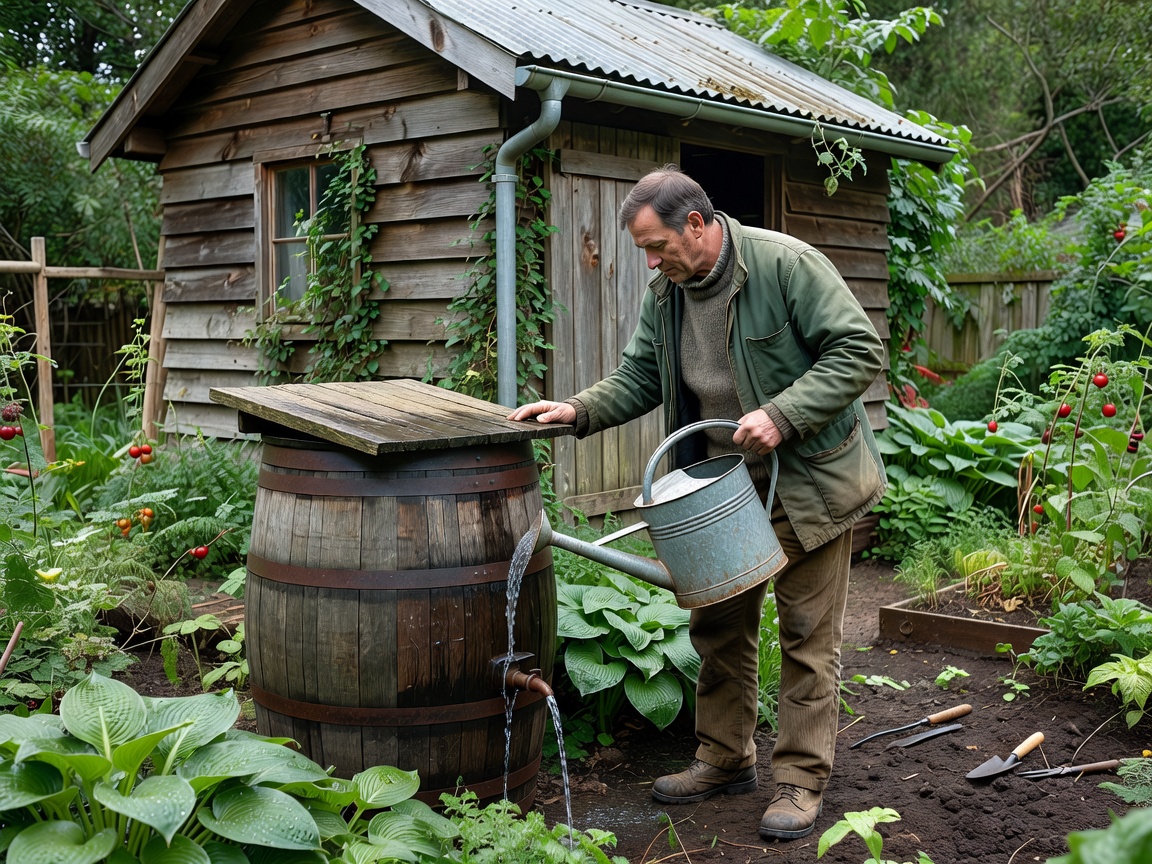
Use a purpose-made, opaque container with a secure lid and suitable screened openings. Set it on a level base designed to support the full load, following installation guidance. Keep children and animals from accessing the water, and do not improvise a raised stand from unstable materials. Plan an overflow route that will not damage foundations, flood neighbouring land or leave a slippery path.
Check roof and gutter materials for suitability and keep gutters clear using safe access methods. Avoid collecting from surfaces that may introduce harmful contamination. Stored rainwater is non-potable: do not use it for drinking, food preparation or handwashing. Follow local public-health guidance for edible crops and avoid splashing stored water onto edible portions, particularly those eaten raw. Never connect a stored-water system to the mains supply without approved protection and qualified advice.
Covered storage also helps limit mosquito access, but screens, lids and outlets still need inspection. Clean and maintain the system according to its instructions, and consider winter conditions before fittings freeze. If the garden is shared, label the supply clearly and agree who checks it. A barrel that cannot be safely accessed or maintained is not a good installation, however useful rainwater might otherwise be.
Keep a short watering record
Note which beds dry first, where water runs off and whether a plant improves after watering. On slopes or compacted soil, a slower application may be more useful than one long flow that escapes the root zone. Early watering can reduce avoidable evaporation in suitable conditions, but timing should also fit local restrictions and plant health considerations.
Look for small, repeatable improvements rather than a gadget-led overhaul. Fix one leak, adjust one misplaced outlet and review the schedule after rain. Your water supplier, local authority and established horticultural sources can provide regional guidance. Their advice on restrictions, plumbing and health should take precedence over a general garden article.